
· The DigDug team
The vowel families hiding inside irregular verbs
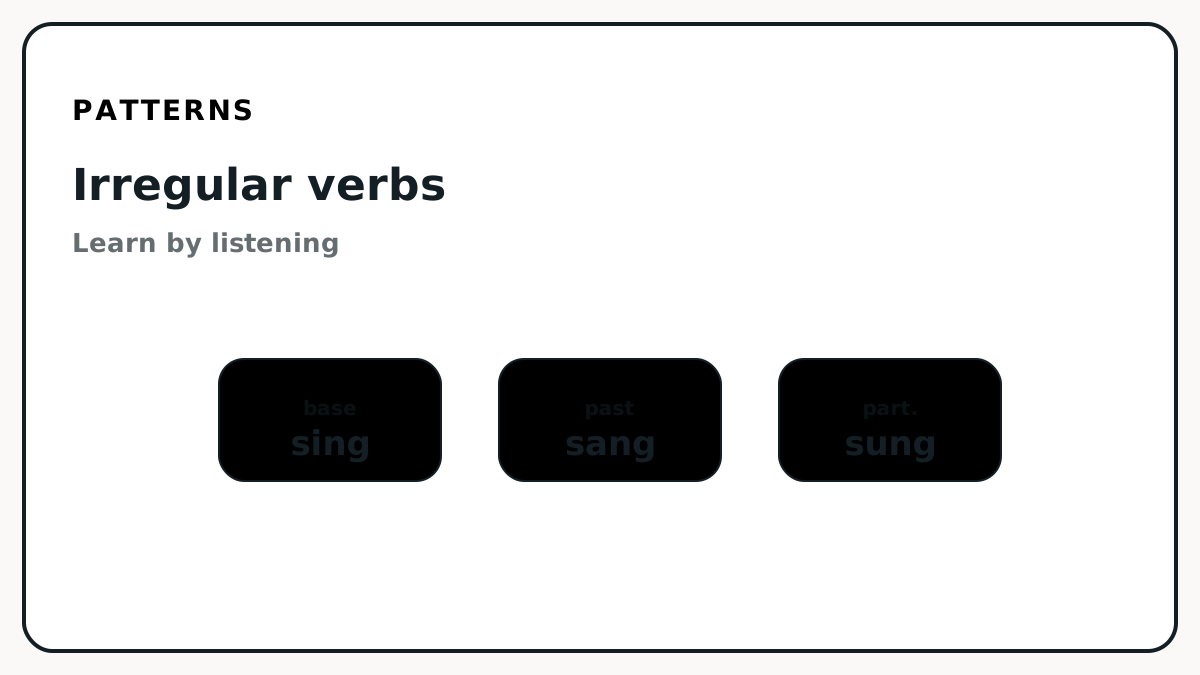
English irregular verbs get taught as if each one is its own island — 200 separate things to memorize, with nothing connecting break to speak to steal. They’re not unrelated, though. Most of them are the leftover pieces of Old English’s strong verb system, which built its past tenses by shifting an internal vowel instead of adding an ending. That system mostly disappeared, but the vowel shifts it left behind still cluster into recognizable families.
A few of the clearest ones
i → a → u. Sing, sang, sung. Drink, drank, drunk. Swim, swam, swum. Once this shift is familiar, a verb you’ve never drilled — spring — is mostly predictable: sprang, sprung.
Past equals participle, both ending in -ought or -aught. Think, thought, thought. Buy, bought, bought. Catch, caught, caught. No separate participle to learn here — one new form covers both slots.
ear → ore → orn. Wear, wore, worn. Tear, tore, torn. Swear, swore, sworn. A less common family, but a clean one once you’ve heard it once or twice.
Fifteen families like these cover the great majority of the 200 verbs that actually come up in everyday English — the full breakdown is here. A few verbs genuinely don’t belong to any family (be, go, do, have — see the “one of a kind” group), and those really do need to be memorized individually. But they’re a small minority, not the norm the alphabet makes them look like.
Why this matters for how you practice
Grouped by pattern, twenty minutes with one family teaches you the shape of a whole cluster of verbs, not just one word. That’s a better use of study time than working through 200 verbs in alphabetical order, where every single one feels like it’s starting from zero.
It’s also why hearing the pattern matters more than reading it: a vowel shift is fundamentally an audible thing. Sang and sung look similar enough on a page that the difference barely registers; said out loud, one after another, the shift is obvious and hard to forget.